
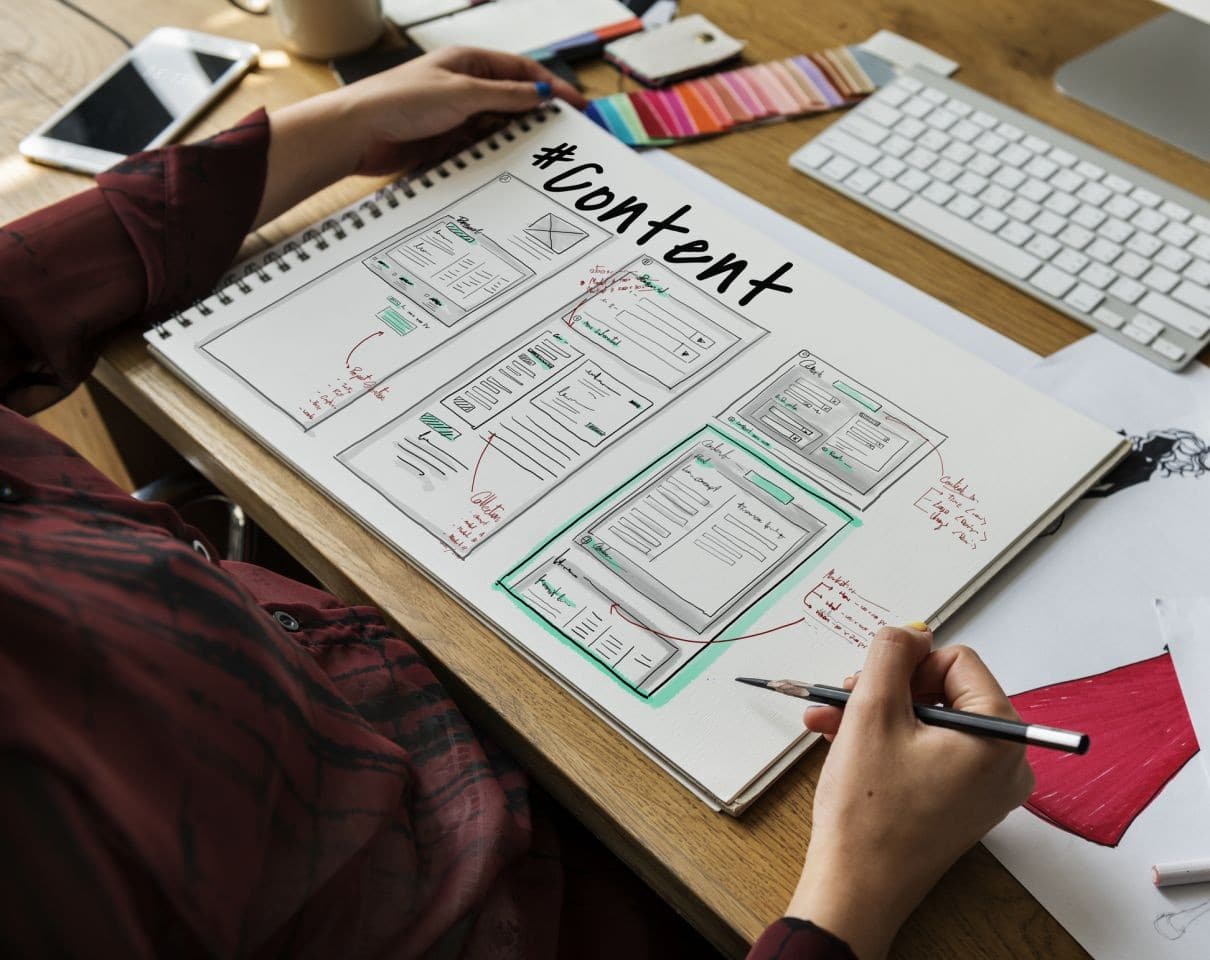
Building a website involves many steps. Most are best handled by a professional developer or designer. One step, however, cannot be outsourced in the same way. Assembling content relies on knowing the business inside and out, which makes it best accomplished by the owner.
Content ownership matters because design alone does not make a website. Without clear, business-specific content, visitors and search engines have nothing to understand or evaluate. Strong content gives structure to the site and direction to the design. Let’s talk about the content your website must have, along with the content that will help it perform better over time.
Assembling Content: Three Must-Have Pages
Anyone who has spent time browsing or shopping online has seen the same core pages again and again. Every effective website includes a home page, an about page, and a contact page. These pages form the foundation that everything else builds on. Let’s go over them in detail.
Home page
The home page often creates the first impression. Many visitors will land here before viewing anything else, which makes clarity critical. Consequently, this page should quickly explain what your company does, who it serves, and why it is different.
Visitors should not have to search for basic answers. If you have clearly defined your value proposition, writing this page is easy. It also reinforces stronger messaging across your site, including branding and marketing materials.
Ultimately, a strong website does not require long blocks of text, it requires focus. And it starts with a clear home page that gives visitors confidence that they are in the right place.
About page
The about page is one of the most frequently visited pages on most websites. People click it because they want context. This page should explain who you are, how the company started, and who is behind it today.
Adding photos here adds context by helping visitors connect real faces to real names, which makes the business or organization feel more human. They also help an about page build trust before any sales conversation begins. When pages skip this step, they often feel generic and forgettable. Showing personality, tone, and even light humor gives people something to relate to and remember.
Contact page
Once visitors decide they want to reach you, friction becomes the enemy. The contact page should remove that friction by making it easy to find you in whatever way works best for the visitor. Clear contact details, a simple form, and helpful context like a map or business listings reduce uncertainty. If everything is easy to locate, a strong contact page turns interest into action.
Assembling Content: Landing Pages
The core pages establish credibility, but they are not enough on their own. To attract search traffic and convert visitors, your website needs dedicated landing pages.
Each service or product deserves its own page. If you combine everything into a single page, you’ll limit how search engines index your site and reduce how precisely you can match user intent. Separate landing pages create multiple entry points, allowing visitors to find exactly what they are looking for.
One advantage landing pages offer is flexibility. Each page can focus on a specific problem, explain how your offering solves it, and make the next step clear. Over time, these pages will become some of your strongest sales assets.
Ongoing Content and Growth
Not all content needs to exist on launch day. Some pages can be added gradually as your business grows.
Blog posts, resource pages, and service expansions give you space to highlight what makes your company unique. Adding content over time signals activity, supports SEO, and gives returning visitors a reason to come back. As a result, search engines tend to favor sites that stay relevant and up to date.
Why Content Timing Matters
How long does a website take to build? The answer often depends less on design complexity and more on content readiness.
Developers cannot build pages without copy, images, and basic information. When content arrives late, the project slows down. When content arrives early, everything moves faster.
Preparing your content in advance keeps your website build on schedule and reduces back and forth during development. If you have questions about building a website or preparing content, we are happy to help. You can contact Tom at 616-426-9303 to start the conversation.